Old Grooves, New Ears: Why Muscle Shoals Is Having a Moment With Younger Listeners
A 19-year-old in Portland stumbles across a clip of Aretha Franklin's "I Never Loved a Man (The Way I Love You)" on TikTok. She doesn't know who recorded it or where it came from. She just knows it hits different from anything on her usual playlist. She saves it. She searches it. Three hours later she's deep in a Wikipedia spiral about a recording studio in Alabama she's never heard of, and she's adding a dozen songs to her library that were recorded before her parents were born.
This is happening more than you might think.
The Muscle Shoals catalog — those hundreds of sessions cut at FAME Studios and Muscle Shoals Sound across the 1960s, '70s, and beyond — is finding new audiences in ways that nobody could have predicted when Roger Hawkins and David Hood were laying down those iconic rhythm tracks. And the pathways those younger listeners are taking to get there say a lot about how music discovery has changed, and what it means for recordings that were built to last.
The Algorithm Doesn't Care How Old a Song Is
Spotify's recommendation engine is famously indifferent to release dates. If a track has the sonic characteristics that match what a listener gravitates toward — a certain warmth, a particular groove, a vocal performance with genuine emotional weight — it's going to show up in their queue regardless of when it was recorded.
That's good news for music with the depth and production quality of the Muscle Shoals catalog. These recordings were cut on analog tape with musicians who were playing live in the room together, and that creates a texture that streaming algorithms have started to learn listeners respond to. There's a reason that lo-fi hip-hop playlists and "vintage soul" rabbit holes have become such reliable entry points for younger ears discovering older music.
On Spotify, tracks like Wilson Pickett's "Mustang Sally" and Percy Sledge's "When a Man Loves a Woman" — both with deep Muscle Shoals roots — have seen notable streaming growth in the 18-to-24 demographic over the past few years. They're showing up in editorial playlists alongside contemporary R&B and neo-soul, sitting comfortably next to artists like Leon Bridges and Brittany Howard (herself an Alabama native who has spoken about the Muscle Shoals legacy) in ways that feel completely natural.
TikTok and the Sound Check Effect
If Spotify is where younger listeners discover Muscle Shoals music, TikTok is often where they fall in love with it. The platform's audio-first culture — where a snippet of a song can travel across millions of feeds in days — has proven surprisingly hospitable to classic soul and R&B.
The phenomenon works a few different ways. Sometimes a creator uses a Muscle Shoals-era track as background music for a video that has nothing to do with music history, and the song starts generating searches on its own. Other times, music educators and history enthusiasts post explainer content — the kind of "did you know this song was recorded in Alabama" format that performs reliably well — and suddenly a new cohort of viewers is chasing down the original.
The Swampers' story is particularly well-suited to this kind of content. The narrative has everything: a tiny Southern town, a roster of iconic artists, a rhythm section that quietly powered some of the most beloved recordings in American music history. It's compelling on a 60-second video and it's compelling at documentary length, which brings us to the next piece of the puzzle.
The Documentary Effect, Still Rippling
The 2013 documentary Muscle Shoals, directed by Greg Camalier, introduced the studio's story to a mainstream audience that extended well beyond music nerds and history buffs. A decade-plus later, that film is still doing work. It's available on streaming platforms where younger viewers encounter it regularly, often through recommendations or "hidden gem documentary" lists that circulate on Reddit and YouTube.
For many Gen Z viewers, the documentary serves as a kind of orientation — a way to contextualize songs they may have already encountered without knowing their origin. Watching Bono or Keith Richards talk about the mystical pull of that Alabama studio, hearing the surviving Swampers describe what it felt like to be in the room during those sessions, gives the music a backstory that makes it stickier. It's not just a song anymore. It's a place, a moment, a set of real human beings who created something extraordinary under specific circumstances that can never be exactly replicated.
That kind of context is catnip for listeners who are drawn to authenticity — and authenticity is something Gen Z talks about constantly when describing what they want from music.
Vinyl and the Tactile Revival
The vinyl resurgence is real, well-documented, and skewing younger than most people expected. According to the Recording Industry Association of America, vinyl album sales have outpaced CD sales for multiple consecutive years, and a significant portion of those buyers are under 30.
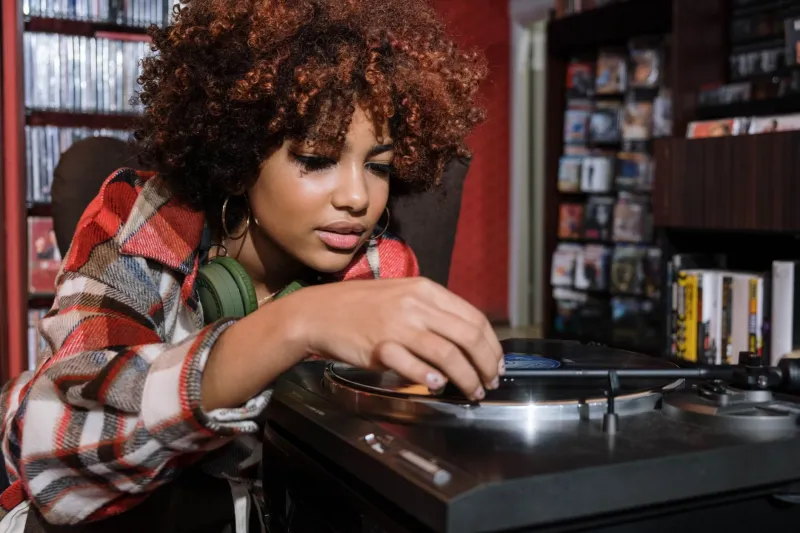
For a catalog like Muscle Shoals Sound's, the vinyl revival is a particularly meaningful development. These recordings were made for analog playback. The warmth, the slight imperfections, the dynamic range that gets compressed in digital formats — all of it comes through more fully on a turntable. When a younger listener drops a needle on an original pressing of an Etta James or Clarence Carter album and hears what those Swampers tracks actually sound like at full resolution, the response is often immediate and visceral.
Record stores across the country report that classic soul and R&B sections are among the most actively browsed by younger customers. Muscle Shoals-connected releases — whether original pressings or the reissues that labels have been putting out with increasing frequency — are moving.
What Modern Artists Are Saying
The generational conversation about Muscle Shoals isn't just happening among listeners. Contemporary artists are increasingly vocal about the influence those recordings have had on their own work.
Brittany Howard, the Alabama Shakes frontwoman whose raw, gospel-inflected vocal style draws obvious comparisons to the Muscle Shoals soul tradition, has spoken in interviews about the weight of that regional legacy. Artists working in neo-soul, Americana, and indie R&B regularly cite the Swampers' rhythm approach as a touchstone — that behind-the-beat looseness, that conversational interplay between bass and drums, is something producers are actively trying to recreate in contemporary sessions.
The fact that younger artists are studying and referencing the Swampers' work means the influence is self-perpetuating. Their sound keeps showing up in new music, which keeps pointing curious listeners back to the source.
The Groove Doesn't Age
Maybe the simplest explanation for why Muscle Shoals is resonating with younger listeners in 2024 is also the most obvious one: the music is really, really good. Great recordings have a way of finding new audiences when the conditions are right, and right now the conditions — the streaming infrastructure, the vinyl revival, the documentary culture, the social media discovery loop — are about as favorable as they've ever been for catalog music.
The Swampers built something durable down there in Alabama. Turns out it was built to outlast all of them — and to keep finding new ears for as long as people care about music that sounds like it means something.