Mud, Groove, and Magic: The Untold Story of How the Swampers Rewired American Music
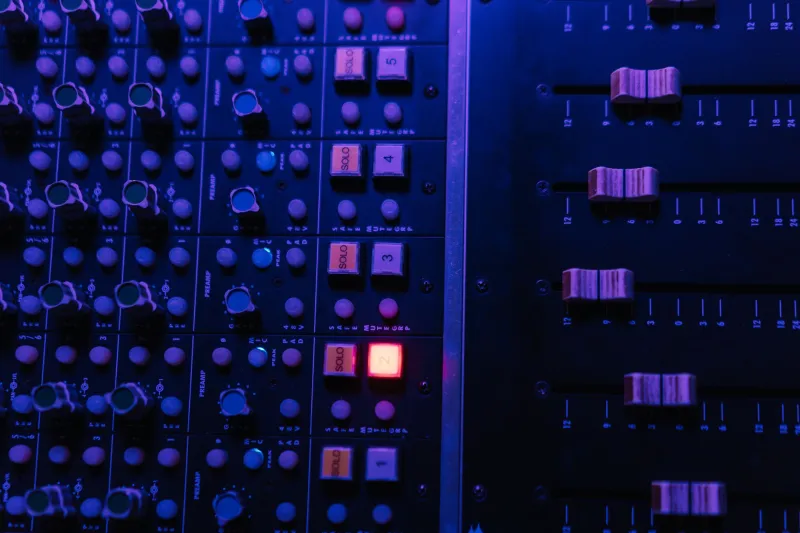
There's a moment in every great recording where the music stops being a collection of sounds and starts being a feeling. For hundreds of artists who passed through Muscle Shoals Sound Studio between the late 1960s and the 1980s, that moment happened because of four guys nobody outside the industry had ever heard of. Barry Beckett on keys, Roger Hawkins behind the kit, David Hood on bass, and Jimmy Johnson on guitar — collectively known as the Swampers — were the invisible engine powering some of the most beloved songs ever put to tape.
So how did a handful of musicians from northwest Alabama end up shaping the sound of an entire nation?
The Birth of a Brotherhood
The Swampers didn't start out as a unit with a name or a brand. They were working players, guys who had come up through the regional circuit, playing whatever gigs came their way and absorbing everything they heard. When producer Rick Hall assembled them at FAME Studios in the mid-1960s, he wasn't building a legend — he was just trying to make records. But something clicked almost immediately.
What made the group special wasn't technical virtuosity, though all four were gifted musicians. It was the way they listened to each other. Roger Hawkins has talked in interviews about how the groove they were chasing was always a conversation between the instruments, not a competition. David Hood's bass lines didn't just keep time — they spoke directly to what Hawkins was doing on the snare and hi-hat, creating a low-end dialogue that gave every track a kind of rolling, inevitable momentum. Jimmy Johnson's rhythm guitar locked in underneath, steady and unshowy, while Barry Beckett's keyboard work added texture and color without ever stepping on the lead.
That balance — restrained but deeply soulful — became the signature of the Muscle Shoals sound.
Genre? What Genre?
One of the most remarkable things about the Swampers is how effortlessly they crossed musical boundaries at a time when those boundaries felt pretty rigid. In the late 1960s and early 1970s, soul, rock, country, and R&B were marketed to very different audiences. Radio stations didn't mix them. Record labels kept them separate. But inside the walls of Muscle Shoals Sound Studio, none of that mattered.
When Aretha Franklin came down to record in 1967, the Swampers didn't try to sound like a New York session band or imitate the Motown house players. They played like themselves, and the result — most famously captured on "I Never Loved a Man (The Way I Love You)" — was something entirely new. The track had the emotional intensity of gospel, the rhythmic punch of R&B, and a raw, almost gritty quality that no studio on either coast was producing at the time.
Then the Rolling Stones showed up. And the Swampers played like themselves again. "Wild Horses," recorded at Muscle Shoals in 1969, has a looseness and warmth that stands apart from the Stones' British recordings. Keith Richards reportedly told the band they had no idea what they'd done to his head, hearing that kind of feel coming out of Alabama.
That adaptability wasn't accidental. The Swampers were genuinely curious musicians who respected whatever style came through the door. They didn't condescend to country artists or treat soul singers as exotic. They just played, and they played honestly.
The Philosophy Behind the Pocket
In music production circles, "the pocket" refers to that sweet spot where rhythm feels simultaneously tight and relaxed — where the groove is locked in without sounding mechanical. Every session player in the world chases it. The Swampers seemed to live there.
Part of their philosophy was rooted in restraint. Barry Beckett once described the approach as "leaving space for the singer to breathe." That sounds simple, but it runs counter to the instinct of many talented musicians who want to fill every available moment with something interesting. The Swampers understood that silence, or near-silence, could be just as powerful as a perfectly placed lick. They served the song first and their own egos not at all.
Producer Jerry Wexler, who worked with the band extensively after leaving Atlantic Records, often credited the Swampers with teaching him something about understatement. He came from a New York recording culture where arrangements were dense and polished. Muscle Shoals showed him what happened when you stripped things back and let the emotion carry the weight.
Their Legacy Lives Everywhere
Decades after the Swampers' most celebrated sessions, their influence turns up in the most unexpected places. Producers who have studied those classic recordings talk about the way the rhythm tracks were built — from the bottom up, with the bass and drums establishing the emotional center before anything else was added. That approach, which felt almost radical in its simplicity at the time, is now standard practice in soul, hip-hop, and Americana production.
Younger artists who have made the pilgrimage to Muscle Shoals — and there have been many — often describe a kind of reckoning when they hear those original recordings played back in the room where they were made. The sound is both historical and completely alive. It doesn't feel like a museum piece.
That's the real legacy of the Swampers. They weren't trying to make timeless music — they were just trying to get the take. But in their commitment to feel over flash, to service over showmanship, they accidentally built something that has outlasted almost everything around it.
The mud and the magic were always the same thing down here in the Shoals. The Swampers just knew how to channel both.