Out of the Swamp and Into the Spotlight: How Muscle Shoals Beat the Big Cities at Their Own Game
Let's be honest about something. If you were a music industry executive in 1967 and someone told you that one of the most powerful recording destinations in the country was going to be a small Alabama town with no major label offices, no star-studded nightlife strip, and a population that barely cracked five figures — you would have laughed them out of the room. And yet, that's exactly what happened.
Muscle Shoals didn't win by playing the industry's game. It won by refusing to.
The Geography That Should Have Killed It
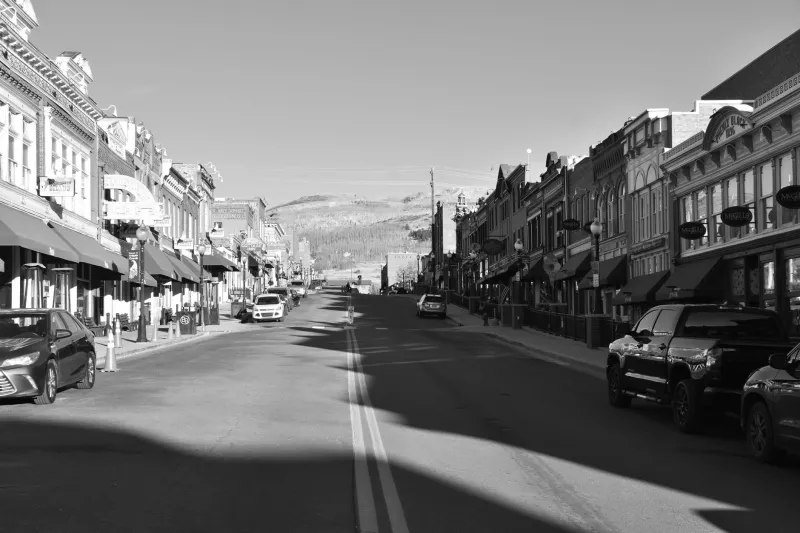
There is no logical reason why northwest Alabama should have become a gravitational center for soul, R&B, country, and rock recording. The nearest major airport required a serious drive. The town had no luxury hotels catering to road-weary artists. There was no scene in the conventional sense — no buzzy clubs where you could catch a late set and network over drinks with a label executive.
By every conventional measure, Muscle Shoals was the wrong place to build a world-class studio.
But geography has a funny way of cutting both directions. The same isolation that should have been a dealbreaker turned out to be a quiet selling point. Artists who made the trip to FAME Studios or Muscle Shoals Sound Recording weren't there to be seen. They weren't there to attend a party or fulfill a contractual obligation to some label's preferred facility. They came because they wanted to make something. And when you're that far from the machinery of the industry, the music tends to be the only thing that matters.
What the Big Cities Were Actually Selling
To understand why Muscle Shoals punched so far above its weight, it helps to understand what Nashville, New York, and Los Angeles were actually selling during their respective peaks — and it wasn't always music.
New York in the early 1960s was selling access. The Brill Building model was efficient and professional, but it was also transactional. Songs were written to spec, sessions were tightly scheduled, and the whole enterprise operated like a well-oiled machine that produced hits the way a factory produces widgets.
Nashville was selling a brand. The Sound of Nashville was real and it was commercially potent, but it also came with expectations. Strings, background vocals, a certain polish that made country music palatable to a mainstream pop audience. Artists who didn't fit the mold often found themselves squeezed into it anyway.
Los Angeles was selling cool. The studios out there had the best gear, the best session players on paper, and a proximity to the entertainment industry that made everything feel like a potential crossover moment. But cool has overhead, and overhead has a way of getting between an artist and the thing they're actually trying to say.
Muscle Shoals, by contrast, was selling something harder to quantify: a feeling. And it turned out that feeling was exactly what the most important artists of the era were desperately looking for.
The Swampers as Competitive Advantage
A huge part of what made the Muscle Shoals studios genuinely different — not just in mythology but in practice — was the house band. The Swampers, the group of white session musicians from Alabama who somehow developed an almost supernatural fluency in Black American music, were unlike anything the major markets could offer.
In New York or L.A., you could book excellent session players. Technically proficient, fast readers, reliable. But the Swampers weren't just technically excellent. They listened differently. They responded to the emotional temperature of a session in real time, finding pockets and grooves that felt inevitable rather than constructed. When Aretha Franklin walked into FAME Studios in January 1967, the result wasn't just a hit record. It was a career-defining moment that neither New York nor Detroit had managed to produce for her, despite years of trying.
That wasn't a coincidence. It was the Muscle Shoals effect in action.
Authenticity as Business Strategy
Here's the thing that the music industry took decades to fully absorb: authenticity isn't just an aesthetic value. It's a business strategy.
The major label headquarters in New York and Los Angeles were optimized for efficiency and commercial predictability. Those are real virtues. But they also create institutional pressure toward the safe choice, the proven formula, the sound that already worked last quarter. Muscle Shoals had none of that pressure. The studios there succeeded or failed entirely on the strength of what came out of the sessions, which meant everyone in the room had every incentive to take the kind of creative risks that produced genuinely memorable music.
When the Rolling Stones came to Muscle Shoals Sound Recording in 1969 to cut "Wild Horses" and "Brown Sugar," they weren't slumming it. They were chasing something they couldn't get anywhere else. When Paul Simon recorded there, when Bob Seger made the trip, when Lynyrd Skynyrd developed the sound that would define Southern rock — all of these artists were voting with their feet, choosing a small Alabama town over every shinier option available to them.
That's not nostalgia talking. That's market behavior.
What This Looks Like in the Streaming Era
The music industry in 2024 is a radically different animal than it was in 1967 or 1969. Streaming has democratized distribution in ways that would have seemed like science fiction to the original Swampers. A bedroom producer in rural Nebraska can now theoretically reach the same audience as a major label artist recording in a world-class facility.
And yet the lesson of Muscle Shoals feels more relevant than ever, not less.
Because what the streaming era has not democratized is the human element. Algorithms can surface your music. They cannot create the kind of chemistry that happens when a group of deeply connected musicians locks into a groove together in a room. The thing that made Muscle Shoals irreplaceable — that ineffable quality of people who genuinely understood each other making music together without the interference of institutional pressure — is still the rarest and most valuable commodity in the business.
Independent studios and artist collectives that have absorbed this lesson are thriving. The ones that try to replicate the major label model at smaller scale tend to produce smaller versions of the same predictable output.
The Enduring Blueprint
Muscle Shoals didn't beat Nashville, New York, and Los Angeles by being better resourced or better connected. It beat them by being more honest. The music that came out of those sessions on Jackson Highway and Alabama Avenue was honest about what the artists felt, honest about what the musicians heard, and honest about the community that had quietly built something extraordinary in a place nobody expected.
That's a blueprint that doesn't expire. The geography changes, the technology changes, the market changes. But the fundamental equation — create the conditions for genuine human connection and get out of the way — turns out to produce remarkable results no matter what decade you're operating in.
The swamp is still talking. The industry is still catching up.