Built to Last: Why Producers Keep Digging Up the Same Muscle Shoals Tapes Decades Later
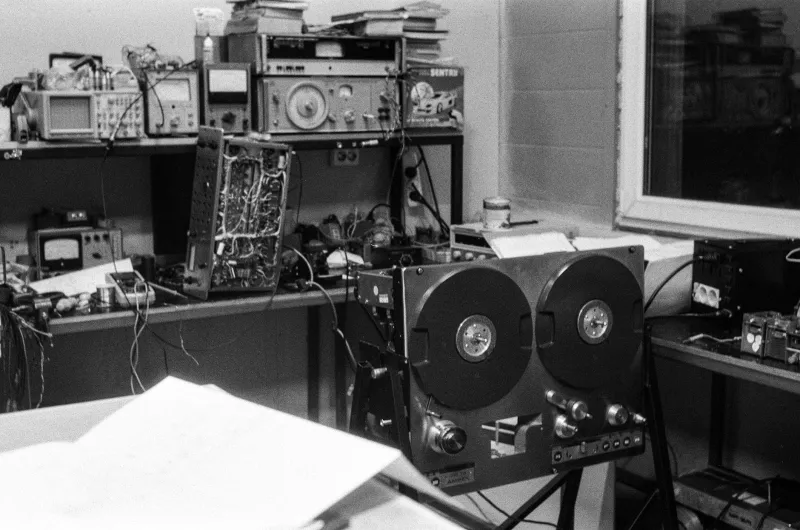
There's a moment every producer knows. You're deep in a session, something's not clicking, and you go digging through old recordings looking for that one element that'll make the track breathe. A lot of folks end up in the same place: a Muscle Shoals session from sometime between 1966 and 1980. It happens so often it's almost a joke in certain studio circles — except nobody's laughing, because it keeps working.
The question worth asking isn't just that these recordings get sampled and referenced constantly. It's why. Why these specific tracks? Why do they hold up when so many of their contemporaries sound like artifacts? And what exactly were the Swampers doing in those sessions that nobody fully realized would matter this much, this long?
The Pocket That Won't Quit
Start with the groove. If you've spent any real time studying Muscle Shoals recordings, you've probably noticed that the rhythm section sits in a particular place — not quite on the beat, not quite behind it. Producers call it the pocket, and the Swampers had a version of it that was almost unnaturally consistent across different artists, different genres, and different years.
Drum machines and click tracks have trained modern ears to expect metronomic precision. What the Swampers offered was something more human and, paradoxically, more useful to producers working with digital tools. Because that slight organic push and pull in the timing creates space — actual physical space in the frequency spectrum and rhythmic feel — that a sample-flip can slide into without fighting the new material around it.
Producers who work in hip-hop and R&B talk about this constantly. A Muscle Shoals drum break doesn't just give you a sound. It gives you a room to work in. The groove is confident enough to anchor something new but loose enough to let it breathe.
Clarity as an Accidental Gift
Here's something that doesn't get discussed enough: the Swampers recorded clean. Not sterile, not overproduced — clean. The separation between instruments on sessions at FAME Studios and the original Muscle Shoals Sound Studio on Jackson Highway is remarkable, especially compared to what was happening in bigger, better-funded rooms in New York and Los Angeles during the same era.
Part of that was practical. The rooms were small. The budgets were tight. You didn't have the luxury of stacking forty tracks of overdubs. You got your core band, you got your arrangement right, and you cut it. That discipline, born of necessity, produced recordings where every element is audible and distinct.
For a producer working fifty years later, that clarity is gold. When you sample a Muscle Shoals recording, you're not fighting a wall of sound. You can isolate the bass. You can pull the organ. You can chop a guitar figure without dragging six other instruments along with it. The tracks are almost modular in their construction, even though nobody planned it that way.
The Records That Keep Getting Pulled
Certain sessions come up again and again when you talk to producers about their go-to Muscle Shoals sources. Clarence Carter's work from FAME. The early Wilson Pickett sessions. Etta James cutting loose in a room full of white guys from Alabama who somehow knew exactly what she needed. Aretha Franklin's brief but seismic time in Sheffield, which produced "I Never Loved a Man (The Way I Love You)" — a recording that has been dissected, referenced, and borrowed from so many times it's practically a textbook.
Then there are the deeper cuts. Jimmy Hughes. Arthur Alexander. Candi Staton, whose recordings from this era have shown up in everything from British house music to contemporary soul. The Swampers' own instrumental work, laid down under various names, which contains some of the most sample-ready rhythm tracks ever committed to tape.
What these recordings share, beyond their obvious quality, is a kind of timelessness that feels almost engineered — except it wasn't. It was just what happened when genuinely talented musicians played together long enough to develop a shared language, then applied that language to great songs with minimal interference.
What Contemporary Producers Actually Hear
Talk to producers working today — the ones making records that chart, the ones building careers in genres that didn't exist when these tapes were made — and you hear variations on the same theme.
The bass lines are functional in a way that transcends era. They don't date themselves with stylistic flourishes. They do their job with such fundamental correctness that they still sound right under modern production. The keyboard work, particularly the organ and piano parts, has a warmth that digital instruments have spent decades trying to replicate without fully getting there. And the drums — always back to the drums — have a crack and a room sound that plug-ins can approximate but not quite duplicate.
There's also something about the feel of these recordings that producers describe almost mystically. A looseness that's controlled. An emotion that's restrained enough to be useful. The Swampers weren't playing for the ages — they were playing for the session, for the artist in front of them, for the song. That focus, that service orientation, produced performances that are remarkably free of ego. And ego, in a sample, is a liability.
Future-Proofed Without Knowing It
None of this was intentional. Roger Hawkins wasn't thinking about what a producer in 2024 might need when he settled into his kit. David Hood wasn't laying down bass lines with an eye on their eventual resale value. They were doing their jobs, making records, getting it right for the moment.
But the choices they made — the restraint, the clarity, the groove — turned out to be exactly what the future needed. In an era where music production is increasingly built on the bones of the past, the Muscle Shoals recordings are among the most structurally sound bones available. They don't crumble when you apply pressure. They hold.
There's a lesson in that, probably, about the relationship between craft and longevity. The recordings that last aren't always the ones made with the most ambition or the biggest budgets. Sometimes they're the ones made by people who cared enough to get it right, in a small room in northwest Alabama, with no particular thought for posterity.
Posteriority found them anyway. It always does.
The Living Archive
Every time a new record drops with a Muscle Shoals sample buried in the mix, the archive gets a little more alive. The Swampers' work isn't sitting in a museum — it's in active circulation, being recontextualized and reinterpreted by artists who may have never set foot in Alabama and may not even know exactly where their source material came from.
That's a strange kind of immortality. And it's one that the players themselves probably find equal parts flattering and baffling. But it's real, and it's ongoing, and it says something important about what happens when musicians play with genuine intention in a room where the only goal is making the song as good as it can possibly be.
The tapes don't die. They just keep working.