Less Gear, More Soul: How Muscle Shoals Proved That Limitations Are a Producer's Best Friend
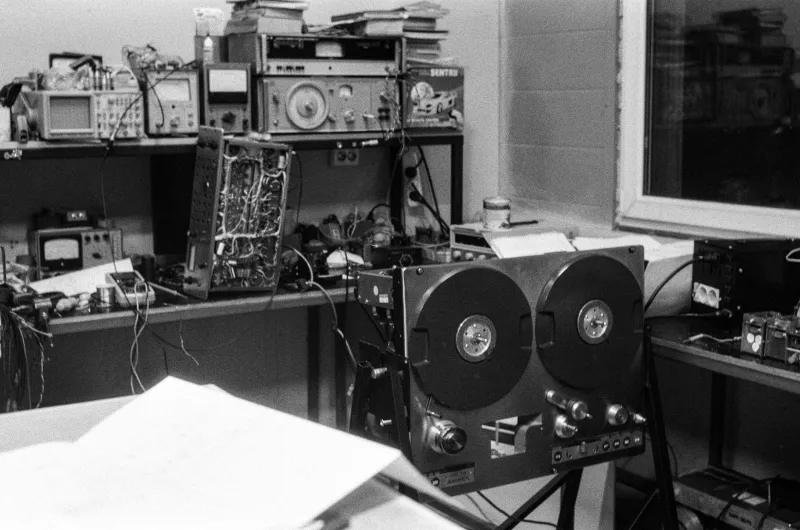
There's a version of the Muscle Shoals story that sounds almost like a joke. A handful of musicians, working in a converted coffin factory and later a repurposed grocery store warehouse, in a small Alabama river town most Americans couldn't find on a map, with equipment that major studios in New York and Los Angeles would've laughed out the door — and somehow, impossibly, they kept making the most emotionally devastating records in American music.
The punchline? The limitations weren't a bug. They were the whole point.
What Muscle Shoals Didn't Have
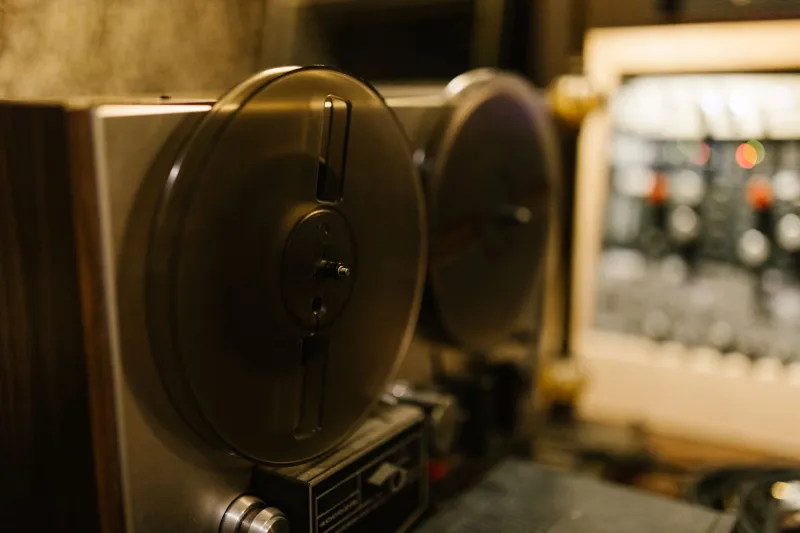
Let's be honest about what artists were walking into when they came down to Northwest Alabama. FAME Studios and Muscle Shoals Sound Studio weren't exactly rolling in luxury. Early sessions were cut on modest four-track and eight-track machines at a time when top studios were racing toward 24-track setups. The rooms were small. The budgets were tight. There was no fancy catering, no sprawling lounge, no rows of vintage outboard gear stretching wall to wall.
What there was: a core group of session musicians — the Swampers — who knew each other's instincts cold, a focused work ethic that prioritized feel over perfection, and a producer culture that demanded you get it right fast because there wasn't money to waste on endless takes.
Aretha Franklin cut some of her most celebrated vocal performances at FAME in 1967 under conditions that would make a modern engineer wince. The session famously fell apart before it was finished — but not before "I Never Loved a Man (The Way I Love You)" was laid down, a track that still sounds like it was recorded inside somebody's chest. Wilson Pickett, the Rolling Stones, Percy Sledge — they all came through and left with something raw and alive that their home studios, with far more resources, hadn't been able to give them.
The Psychology of the Constraint
There's actual science behind why this happens, and it maps pretty cleanly onto what went down in Muscle Shoals. Psychologists who study creativity have long noted that when people face too many choices, decision-making collapses. It's the paradox of abundance — more options can actually produce worse outcomes because the brain gets stuck in evaluation mode instead of execution mode.
In a studio with eight tracks and a tight clock, you don't spend two hours auditioning synthesizer patches. You make a call and you commit. That commitment transfers directly into the performance. Singers aren't second-guessing themselves through take forty-seven. Musicians aren't quietly wondering if the arrangement would be better with an orchestral overlay. Everyone is locked in, present, and working from instinct.
Rick Hall, the founder of FAME Studios, ran a tight ship for exactly this reason — even if he might not have framed it in those terms. Hall was known for moving sessions quickly, for demanding focus, and for trusting the musicians in the room to deliver rather than spending days chasing a sound on paper. That urgency became a kind of creative pressure cooker. Artists arrived, the tape rolled, and something had to happen.
Geography as a Feature, Not a Bug
The isolation of Muscle Shoals played its own role in all of this. Artists who made the trip down to Alabama weren't popping in between label meetings in midtown Manhattan. They were committing. The drive or flight to the Shoals created a psychological break from whatever was going on back home — the label pressure, the road fatigue, the noise of a career in motion.
When you're in a small town with not much else to do, you go to the studio and you work. There's no club to bounce to at midnight, no industry party pulling your attention sideways. That geographic remove created a kind of forced focus that major-city studios simply couldn't replicate, no matter how good their gear was.
Duane Allman, who cut his teeth doing session work in Muscle Shoals before the Allman Brothers Band took off, later talked about the way the town demanded a certain seriousness from musicians. You weren't there to be seen. You were there to play.
The Modern Studio Problem
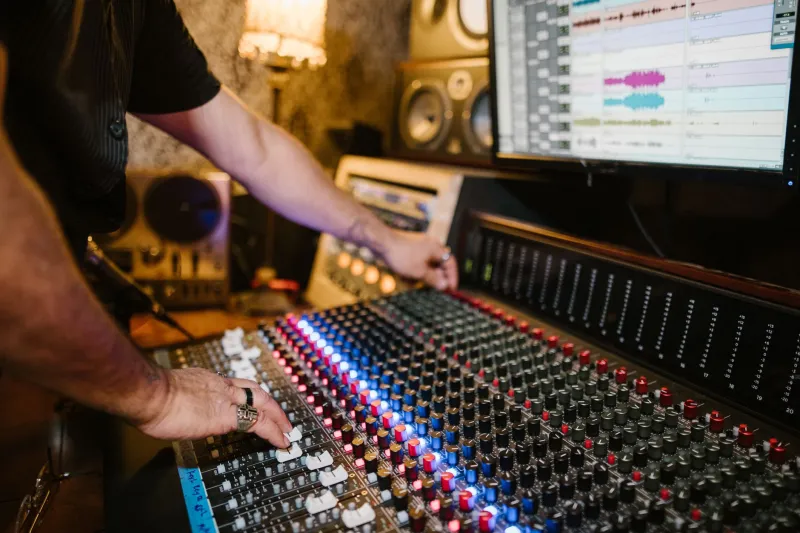
Walk into a well-funded recording studio in 2024 and you'll find something that would've looked like science fiction to the Swampers. Unlimited tracks. Digital audio workstations with tens of thousands of plugins. Sample libraries that can conjure any instrument ever recorded. Autotune, pitch correction, beat quantization — tools that can smooth over almost any imperfection in real time.
And yet, something keeps getting lost in the translation.
It's not that modern records don't sound good — many of them are technically flawless. But "technically flawless" was never what made a record matter. What made records matter was the feeling that something real was happening, that the people in the room were actually reaching for something and either catching it or gloriously failing to. That tension — the possibility of failure — is what made recordings feel alive.
When you can fix everything, you fix everything. And somewhere in that process, the humanity gets buffed out.
Producers working today who are aware of this problem sometimes deliberately impose constraints on their sessions — limiting track counts, recording to tape, banning certain plugins, cutting live with minimal overdubs. They're essentially trying to rebuild the Muscle Shoals environment from scratch, which is a pretty remarkable testament to what those sessions figured out by necessity decades ago.
What the Swampers Actually Understood
The musicians who made up the Muscle Shoals rhythm section — David Hood, Roger Hawkins, Barry Beckett, Jimmy Johnson, and the rotating cast of players who passed through those rooms — weren't thinking about the psychology of creative constraints. They were just playing.
But embedded in the way they played was a deep understanding that music lives in the imperfections, in the slight drag of a snare hit, in the way a chord voicing breathes differently depending on how hard a guitarist leans into the pick. None of that survives heavy editing. None of that survives the pursuit of technical perfection. It only survives when you trust the room, trust the players, and let the tape roll.
The Muscle Shoals studios weren't making the best of a bad situation. They had stumbled onto something that well-resourced studios were actively working against — the creative power of having no choice but to commit.
The Lesson That Still Applies
If there's something for modern artists and producers to take from the Muscle Shoals story, it's not that they need to go find a converted coffin factory in Alabama and strip their sessions down to four tracks. It's that the conditions that feel like obstacles are often the ones doing the most important work.
The deadline that forces you to commit. The limited gear that makes you choose. The geographic remove that strips away distraction. The tight budget that demands you get it right the first time. These aren't problems to be solved. In the right hands, they're exactly the point.
The records that came out of Muscle Shoals didn't sound the way they did in spite of the constraints. They sounded that way because of them. And the music world has been trying to figure out how to get back to that ever since.