What's Actually in the Walls: Breaking Down the Muscle Shoals Sound Into Its Working Parts
There's a moment that keeps happening in studios across the country. An engineer pulls up a vintage Muscle Shoals session—maybe Aretha's I Never Loved a Man the Way I Love You, maybe the Staple Singers cutting I'll Take You There—and somebody in the room says some version of the same thing: How did they do that?
It's not a rhetorical question. These are professionals with spectral analyzers, reference monitors, and every piece of outboard gear money can buy. They can see the frequencies. They can measure the reverb tail. They can isolate every track. And still, something about those recordings resists full explanation in a way that drives serious audio people genuinely crazy.
So what is the Muscle Shoals sound, exactly? Not the mythology. Not the vibe. The actual, physical, measurable thing.
Start With the Room
The original FAME Studios on Avalon Avenue—and later the building on Muscle Shoals Highway that became Muscle Shoals Sound Studio—weren't designed by acoustic architects. They were adapted spaces, converted from whatever was available. That improvised origin turned out to matter enormously.
The control rooms and tracking spaces had dimensions that weren't optimized according to any textbook formula, which meant they had natural resonance characteristics that a purpose-built room might have engineered away. Low-end frequencies behaved in ways that were specific to those four walls. The flutter echo, the way sound built up in corners, the ceiling height—all of it contributed to a room sound that became inseparable from the recordings made inside it.
Modern producers who've tried to clone that environment have run into the same wall every time: rooms are deeply personal things. You can measure a space with incredible precision and still not fully account for the way it sounds when it's full of people, when the humidity is up in an Alabama summer, when the building itself is settling into a Tuesday afternoon. The Muscle Shoals studios had years of recorded history embedded in their physical character, and that's not something you can install.
The Gear Was Never the Point—Except When It Was
The Swampers weren't gear obsessives in the way that modern boutique studio culture tends to celebrate. They worked with what they had and they made it work hard. But the specific equipment choices of that era—the console configurations, the microphone placements, the tape machines running at particular speeds—did shape the recordings in ways that are now studied pretty carefully.
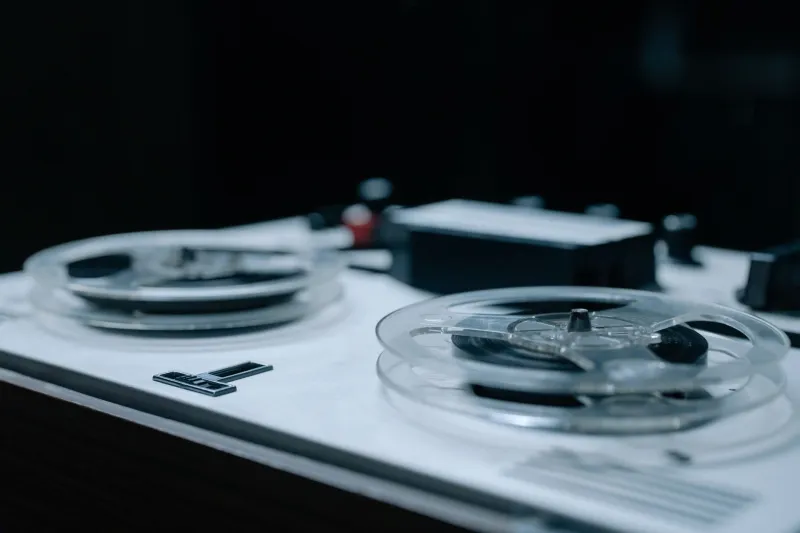
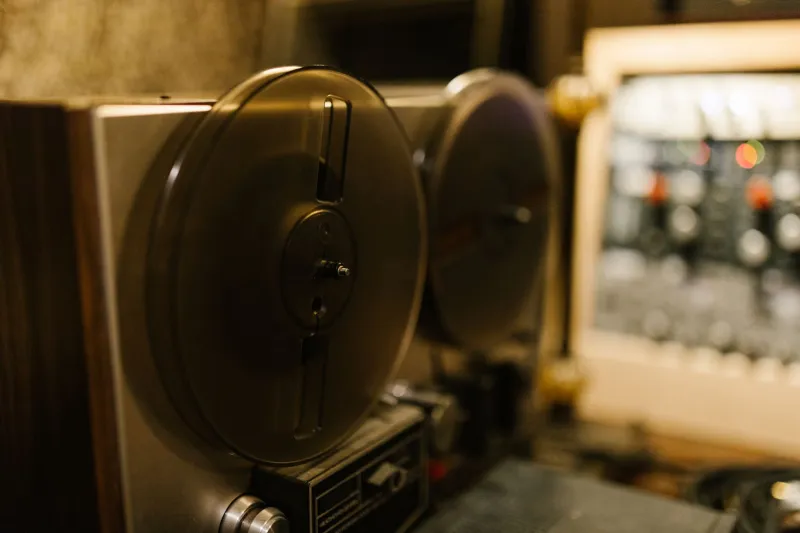
Tape saturation is a big part of the conversation. Analog tape running at 15 or 30 inches per second compresses transients and adds harmonic content in ways that digital recording doesn't naturally replicate. The warmth that people associate with those old sessions isn't an accident or a metaphor—it's a measurable byproduct of the recording medium itself. When a kick drum hit tape in that era, it behaved differently than it does hitting a digital buffer today. The attack rounded off slightly. The low end thickened. The whole thing breathed.
Microphone placement was another variable the Swampers handled with an almost intuitive confidence. Roger Hawkins's drums were mic'd to capture the room as much as the kit itself. That meant the recordings had air in them—a sense of physical space—that close-mic'd modern recordings often spend considerable effort trying to add back in after the fact.
Dynamics as a Compositional Tool
Here's where the conversation gets more interesting and harder to quantify. The Swampers understood dynamics not just as a volume consideration but as a compositional one. They knew when to pull back. When to leave space. When the most powerful thing a bass guitar could do was not play.
David Hood's bass lines are a masterclass in this. He wasn't filling every available pocket. He was choosing moments, and the silence between those moments was doing as much work as the notes. Barry Beckett's keyboard parts had the same quality—present without being cluttered, supportive without being obvious.
This kind of restraint is genuinely difficult to teach. It comes from years of playing together, from knowing your bandmates well enough to trust them with the space you're leaving open. Session musicians who cut their teeth in Nashville or New York brought different instincts—instincts shaped by different musical cultures and different pressures. The Swampers developed theirs in relative isolation, playing for each other as much as for the artists they were backing, and that insularity produced something cohesive in a way that's almost sociological.
Why Reverse-Engineering Fails
Modern producers have access to tools that would have seemed like science fiction in 1967. Convolution reverb can sample the actual acoustic impulse response of a room and apply it to any recording. Tape emulation plugins model the harmonic distortion of specific analog machines with remarkable accuracy. AI-assisted mixing tools can analyze vintage recordings and suggest processing chains designed to approximate their frequency profiles.
And none of it quite gets there. Engineers who've worked extensively with Muscle Shoals material will tell you that the gap isn't primarily technical. It's performative. The way those sessions were tracked—mostly live, mostly together in the room, with arrangements that had been worked out in real time rather than programmed in advance—produced a kind of human variance that's almost impossible to simulate. Timing imperfections that a modern session would quantize away were left in. Breath sounds, chair creaks, the natural decay of a note—all of it stayed.
That organic texture isn't just charming. It's functionally important to why those recordings feel the way they feel. When you hear Aretha's vocal sitting in a track that was played by human beings responding to each other in real time, something in your nervous system registers the aliveness of it. That's not mysticism. That's psychoacoustics.
The Fingerprint Survives
Labels and producers aren't chasing the Muscle Shoals sound because they're nostalgic. They're chasing it because it still works. Those recordings convert. They hold up in car speakers and earbuds and big venue sound systems in ways that a lot of more technically pristine recordings don't.
There's a durability to recordings made in that room, with those players, in that particular way, that suggests the sound wasn't incidental. It was structural. The choices—conscious and unconscious—that the Swampers made every day added up to something that functions almost like a signature frequency: identifiable, specific, and stubbornly resistant to forgery.
You can get close. Plenty of people have gotten close. But the original still sounds like the original, and that's a remarkable thing for a converted building in northwest Alabama to have pulled off.