From the Floor to the World: How Muscle Shoals Turned Raw Talent Into Lasting Careers
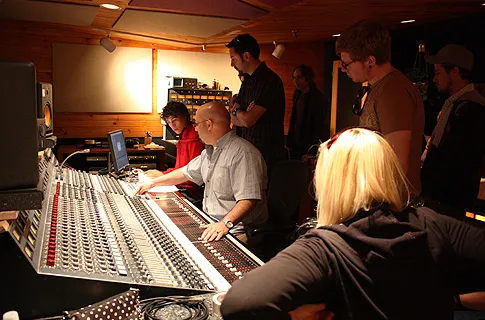
Photo: Metalworks Institute, CC BY-SA 3.0, via Wikimedia Commons
There's a version of music history where talent rises through the usual channels — the right manager, the right city, the right party. And then there's the Muscle Shoals version, where a kid from nowhere Alabama could walk into a studio session as a sideman and walk out three years later with a reputation that preceded him into every major recording hub in the country.
That wasn't an accident. It was a system — informal, unspoken, but remarkably consistent — and it produced some of the most enduring careers in American popular music.
Rick Hall's Open Door (With Strings Attached)
Rick Hall wasn't running a charity. The founder of FAME Studios was famously demanding, occasionally volcanic, and completely uninterested in coddling anyone who couldn't keep up. But buried inside that hard exterior was something that functioned a lot like mentorship, even if he'd have bristled at the word.
Hall had a gift for hearing potential where other producers heard noise. He'd take a chance on a young session player or an untested vocalist, throw them into a live session with seasoned professionals, and watch what happened. The sink-or-swim approach sounds brutal in retrospect, but the musicians who survived it came out the other side with a kind of confidence that's hard to manufacture any other way. You can't fake having played on a real session. Either you held it together or you didn't.
For artists who came through FAME as recording acts rather than session players, Hall's approach was equally transformative. He pushed writers and performers to dig deeper than they thought they could, often pulling a better performance out of someone by simply refusing to accept the comfortable one. The artists who came to Muscle Shoals looking for validation left with something more useful: actual growth.
Jimmy Johnson and the Art of Listening
If Hall was the fire, Jimmy Johnson — guitarist and co-founder of Muscle Shoals Sound Studio — was something closer to the water. Johnson's influence on developing musicians operated at a different frequency. Where Hall pushed, Johnson listened. And in a room full of people who were all trying to be heard, being genuinely listened to by someone of Johnson's caliber was its own kind of education.
Johnson had an encyclopedic feel for what worked on record versus what worked in a room, and he shared that knowledge freely with the younger players who cycled through the studio. He understood that a rising session player wasn't competition — they were an investment. The more skilled the musicians around you, the better your own recordings sounded. It was a collaborative economy, and Johnson operated it with a generosity that kept talented people coming back to northwest Alabama long after they could have gone anywhere else.
For the artists Johnson worked alongside, his guitar playing modeled something crucial: restraint. In an era when flash was easy to sell, Johnson consistently demonstrated that the most powerful thing a musician could do was serve the song. That lesson stuck. You can hear it in the work of dozens of artists who passed through Muscle Shoals and went on to careers built on exactly that kind of intelligent, ego-free musicianship.
The Session Floor as Classroom
What made Muscle Shoals genuinely unusual as a talent incubator wasn't any single mentor figure — it was the structure of the sessions themselves. Recording at FAME or Muscle Shoals Sound meant working alongside players who had already been on dozens of hit records. You weren't learning theory in a classroom; you were learning by doing, in real time, with real stakes.
Young session players absorbed things in that environment that simply couldn't be taught anywhere else. They learned how to lock into a groove with musicians who had played together for years. They learned how to read a room, how to know when to push and when to pull back, how to take direction from a producer without losing their own instincts. These weren't small skills. These were the exact skills that separated working musicians from legendary ones.
And when those young players eventually left Muscle Shoals — for Nashville, for Los Angeles, for New York — they carried that education with them. The Muscle Shoals credential wasn't a line on a resume. It was a demonstrable way of playing, a set of habits and instincts that other producers recognized immediately. Hiring someone who'd done time in the Shoals was, for a long stretch of American music history, a reliable shortcut to getting the right feel on a record.
The Ripple Effect
Trace the careers of the musicians and artists who passed through Muscle Shoals between the mid-1960s and the early 1980s and the ripple effect is staggering. Session players who cut their teeth at FAME ended up anchoring major label recordings in every genre. Songwriters who learned the collaborative, in-the-room writing style that defined Muscle Shoals sessions carried that methodology into writers' rooms across Nashville. Producers who trained under Hall or alongside the Swampers built studios and careers that reflected everything they'd absorbed in Alabama.
Artists like Wilson Pickett, Aretha Franklin, and Paul Simon didn't just make great records in Muscle Shoals — they left changed by the experience, often citing the sessions there as turning points in how they thought about their own work. That's not coincidence. That's the product of an environment specifically designed, if unconsciously, to push everyone in the room toward their best.
Why It Worked Here and Not Somewhere Else
The honest answer is that Muscle Shoals worked as a talent factory partly because of geography. Being in northwest Alabama, away from the industry machinery of Nashville and LA, meant that the people who showed up were there for the music. There was no scene to be seen at, no industry cocktail party to duck out to. You were there to work, and the work was the whole point.
That focus created a culture of seriousness that was, paradoxically, also deeply relaxed. People weren't performing for an audience of tastemakers. They were performing for each other, for the tape, for the song. And in that environment, real development happened — the kind that sticks because it's built on actual craft rather than optics.
The Muscle Shoals pipeline didn't come with a brochure or an application process. It came with a session call and a clock on the wall. But for the musicians and artists who stepped through that door ready to work, it was as good an education as American music has ever offered.